

How to Find Sponsored Ads on Facebook (6 Methods, Ranked)
Ranks six ways to find sponsored Facebook ads and helps readers choose the quickest method based on the information they already have.
If you need to know how to find sponsored ads on Facebook, start with Meta's free Ad Library. Search currently running ads by advertiser or keyword, then choose the delivery country and ad category.
We've pulled competitor creative for our own store launches and tested six ways to find it. The best method depends on whether you start with an advertiser name, product idea, store URL, or ad you've already seen. This guide helps you choose the shortest route and get a useful result without guessing through menus.
You'll also know which four search settings to check before an empty result sends you toward a different research method.
Key takeaways
What are sponsored Facebook ads?
Sponsored Facebook ads are paid posts distributed through Meta's ad system. Facebook marks them "Sponsored," and Meta's public library lets anyone search current ads across its apps. The search can find an active ad that stayed outside your feed. Meta chooses ads with an auction and ranking system after advertisers set an audience and goal.
Your feed is one account's sample, while the library gives a wider view of a named advertiser's active campaigns. Each record can show the creative, start date, platforms, and the Page behind the ad. The label covers ads built in Ads Manager and Page posts an advertiser later boosts, confirming that money supports distribution. The campaign goal and sales result stay private.
Most commercial records show the ad itself and basic delivery facts. Detailed spend, reach, and audience ranges have special coverage rules. Political ads and certain United Kingdom or European Union ads carry more public data. For a normal product ad elsewhere, use the library to study the message and current activity. Sales analysis needs a separate source.
The same record can include versions made for Facebook, Instagram, Messenger, Threads, or other Meta placements. Check the platform icons before you assume the creative ran in Facebook's feed. A campaign may use the same copy with a different crop or format elsewhere.
6 ways to find sponsored ads on Facebook
Six current methods cover advertiser lookup, product discovery, passive browsing, store-based research, and your own ad history. Pick the route that matches what you already know:
- Meta Ad Library: Search a named advertiser or keyword with country filters.
- Dropship Ad Library: Search a product term or image with research filters.
- Advertiser Tracker: Follow a known brand's new ads and spend changes.
- Facebook feed: Inspect delivered ads within their real feed placements.
- Chrome extension: Open ad data from a known Shopify store URL.
- Ad Activity: Return to ads your account clicked, reacted to, or saved.
The first three are search tools for a name, product, or tracked brand. The last three begin with a store, a delivered ad, or your account history, so they answer narrower recovery questions.
1. Search Meta Ad Library
Choose Meta Ad Library when you know an advertiser or a precise keyword. It searches current ads for free, and this current Ad Library guide explains the available lookup approach. Narrow the results by delivery country and category. A new campaign can take time to appear.
Use the official library in this order:
- Open the Meta Ad Library.
- Choose the country where the target audience receives the ads.
- Select "All ads" for an ordinary commercial search.
- Enter the Facebook Page name or a phrase from the creative.
- Pick the correct advertiser from the suggested results.
- Open filters to narrow platform, media type, language, or status.
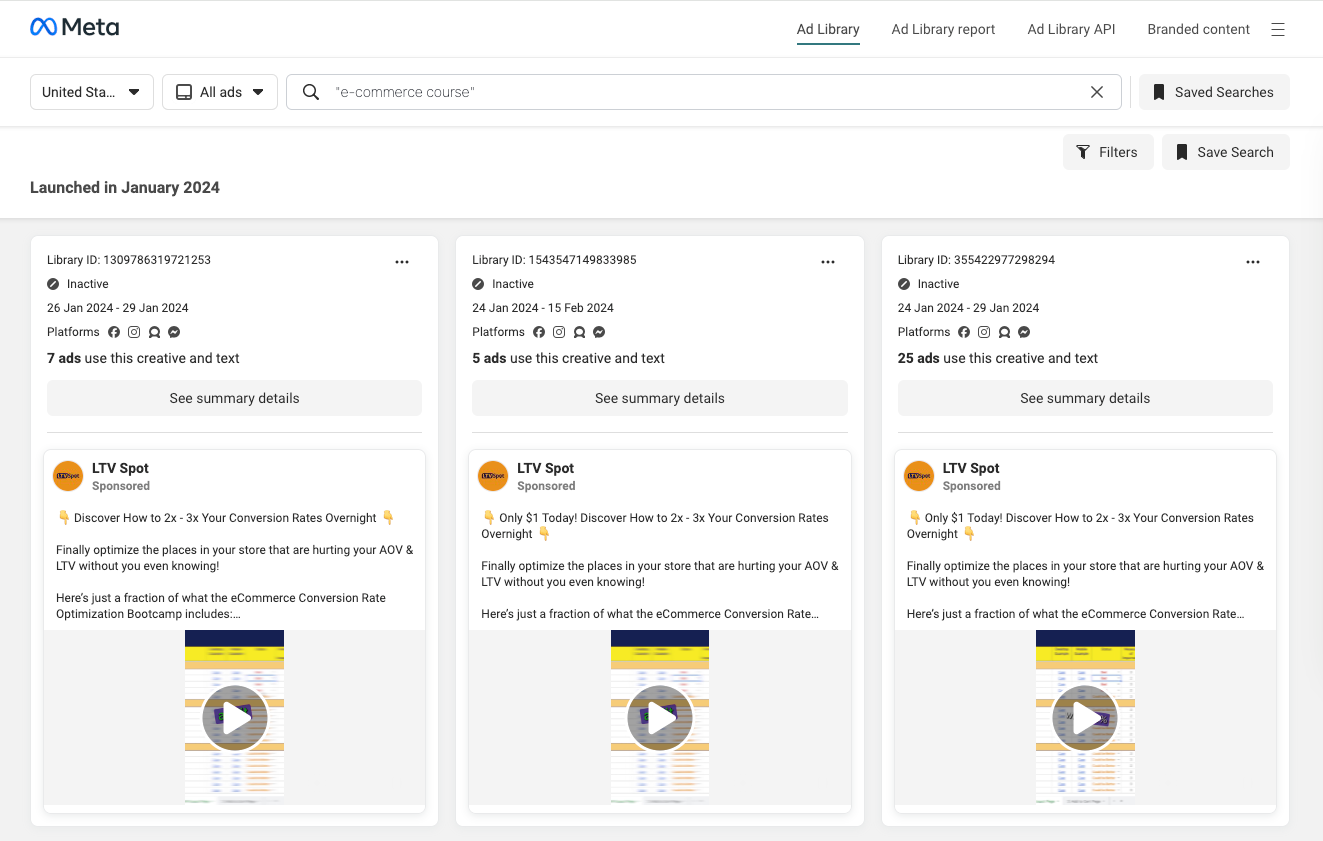
Start with the official Page name when you want one brand. Keyword search can find unknown advertisers when their indexed ads contain your terms. Our guide to Facebook ad keywords helps you build a short list while keeping ad-copy terms separate from audience targeting.
We use the library as the baseline because it's free and goes straight to Meta's records. Discovery is the weak point. A broad product term can return unrelated brands, while generic copy can hide a visual match.
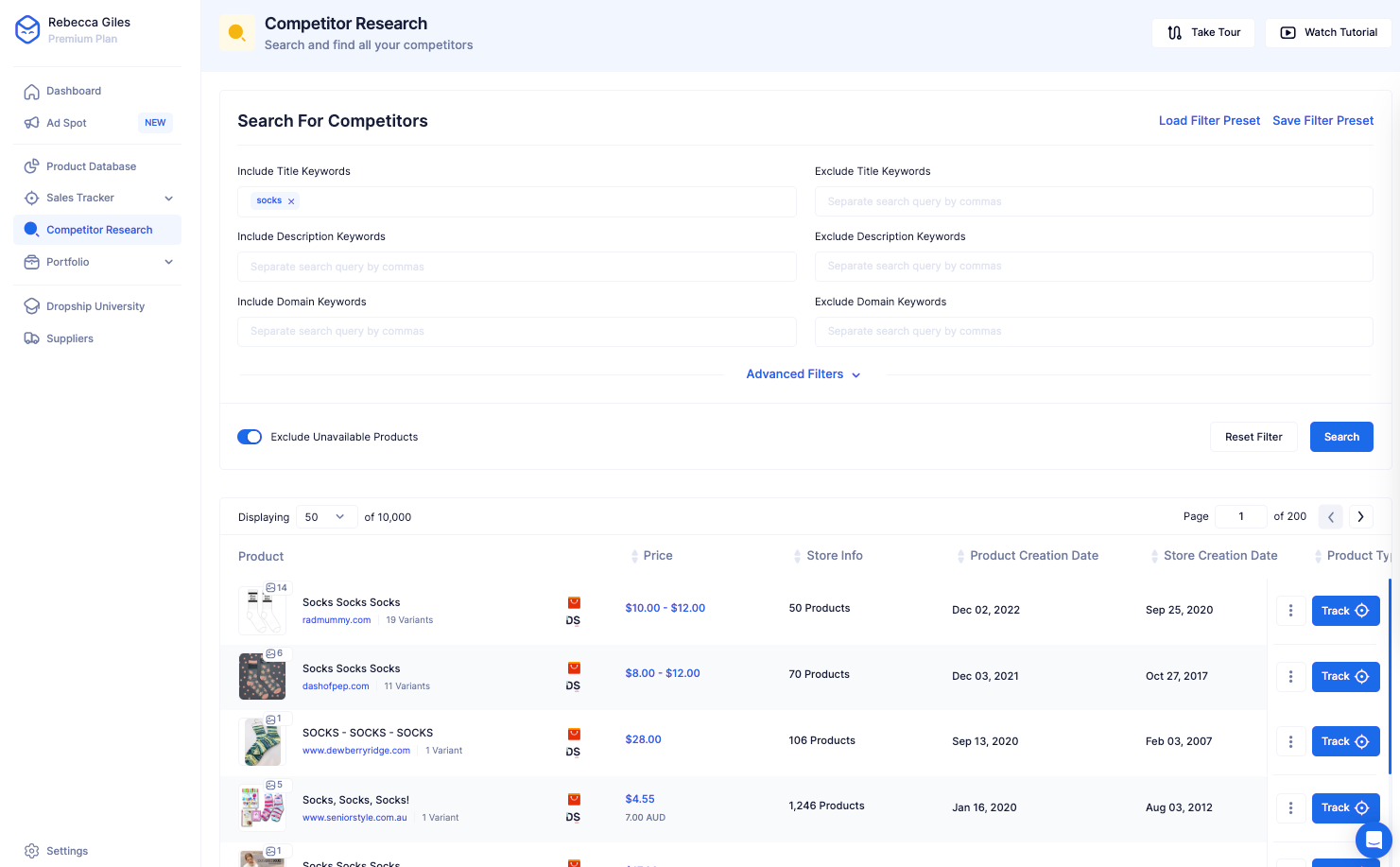
2. Search Dropship Ad Library
Choose Dropship Ad Library when you start with a product idea, phrase, or image. The tool searches ads from Shopify stores. Its filters cover engagement, reach, ad spend, run time, ad-set count, and selling price.
Run the search in this order:
- Open Ad Library inside your Dropship account.
- Enter a product keyword or upload a clear product image.
- Set the country or language that matches your selling market.
- Narrow results by spend, reach, engagement, or run time.
- Open an ad to review its creative and advertiser details.
- Save the useful filter combination as a preset.
Image search matters when sellers use different names for the same item. A portable-blender photo may find close visual matches without your preferred phrase. Spend and run-time filters can then separate short tests from longer campaigns.
The result card should answer three questions before you save it. Check whether the product matches, the advertiser is active, and several creatives support the same offer. Those versions let you compare hooks while the product and offer stay fixed.
We'd choose this route for product research because it answers a different question from Meta's free tool. It can discover ads without a Page name. Access requires a Dropship account, and the database focuses on Shopify advertisers.
Set broad filters first, then narrow one field at a time. That order shows which rule removed the useful ads when a result turns empty. Save the search after you understand what each active filter does.
3. Track a brand with Advertiser Tracker
Use Advertiser Tracker for a known brand that you want to monitor after the first search. Search by advertiser name, Facebook Page, or Ad Library link. Add the right account to a Collection, and the tracker pulls in new ads.
Set up a tracker with these steps:
- Open Advertiser Tracker in Dropship.
- Search the advertiser name or paste its Ad Library link.
- Confirm the Page identity before adding it.
- Put the advertiser in a niche or campaign Collection.
- Return to review new ads and spending trends.
The identity check prevents a common research error. Similar names and regional Pages can point to different stores. Compare the Page link, store domain, logo, and advertised products before you track one.
Give each Collection one purpose, such as direct competitors or adjacent brands. A mixed folder becomes hard to scan because every new ad answers a different question. Clear groups help you spot new hooks, repeated offers, and sudden creative changes.
We prefer this method after discovery because it keeps repeated checks in one place. It can show how creative changes over time. An identified advertiser is still the required starting point, so product discovery belongs in the Ad Library.
Review changes on a set schedule and record what changed. A new ad matters more when it introduces a new offer, product, or proof style. A color swap alone usually deserves a note rather than a new campaign conclusion.
4. Look at your own Facebook feed
Use your Facebook feed for a zero-setup look at ads Meta already serves to your account. Find the "Sponsored" label in the feed, Stories, or desktop right column. Open the three-dot menu or advertiser Page when the ad earns a closer look.
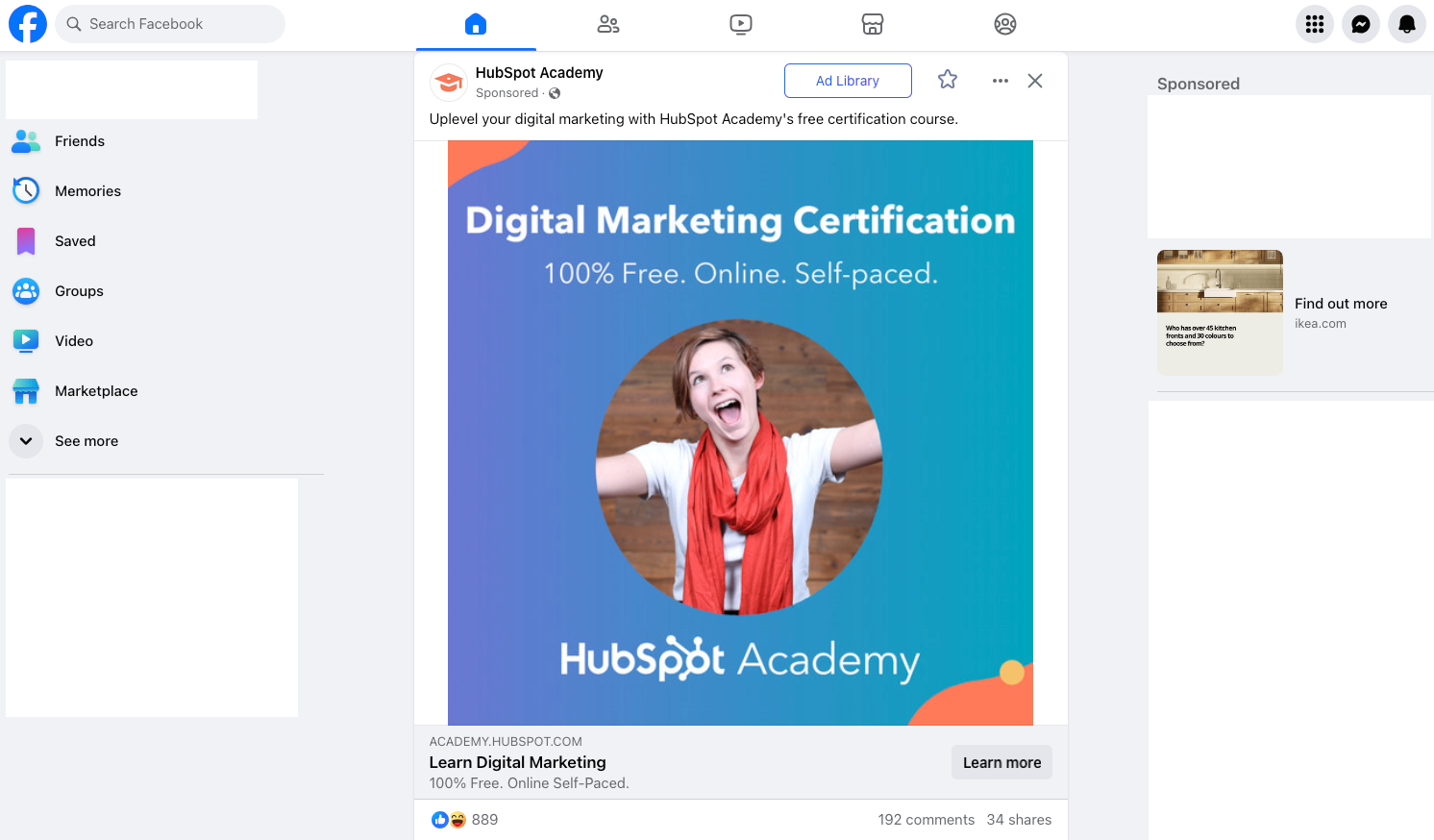
Review each delivered ad with the same short routine:
- Confirm the post carries the "Sponsored" label.
- Record the advertiser, opening line, offer, and call to action.
- Open "Why am I seeing this ad?" for available delivery context.
- Visit the Page or library when the advertiser deserves more research.
This route shows the ad in its real feed setting. You can see what came before it, how much text appears, and where the call to action sits. Those details disappear when a research tool shows only the ad card.
Save one note about why the ad stopped your scroll. The reason might be a product demo, a sharp first line, or a price shown on screen. A plain note gives you something you can test later.
Meta selects the sample for your account, so refreshing the feed can't guarantee a target brand. Use a search tool for the competitor view.
Open the advertiser Page before using its creative as a reference. Match the Page website to the store you intend to study, because copied names and reseller accounts can resemble the original brand.
5. Open a store's ads with the Chrome extension
Use Dropship's Chrome extension when you already have a Shopify store URL. The extension opens product and store research while you browse. Its ad feature can take you from the store to relevant Facebook data without a Page-name search.
Use the store-first route like this:
- Install Dropship's Chrome extension from the Chrome Web Store.
- Visit the Shopify storefront you want to research.
- Open the extension on that store.
- Choose the Facebook ads or Ad Library option.
- Confirm the resulting advertiser matches the store domain.
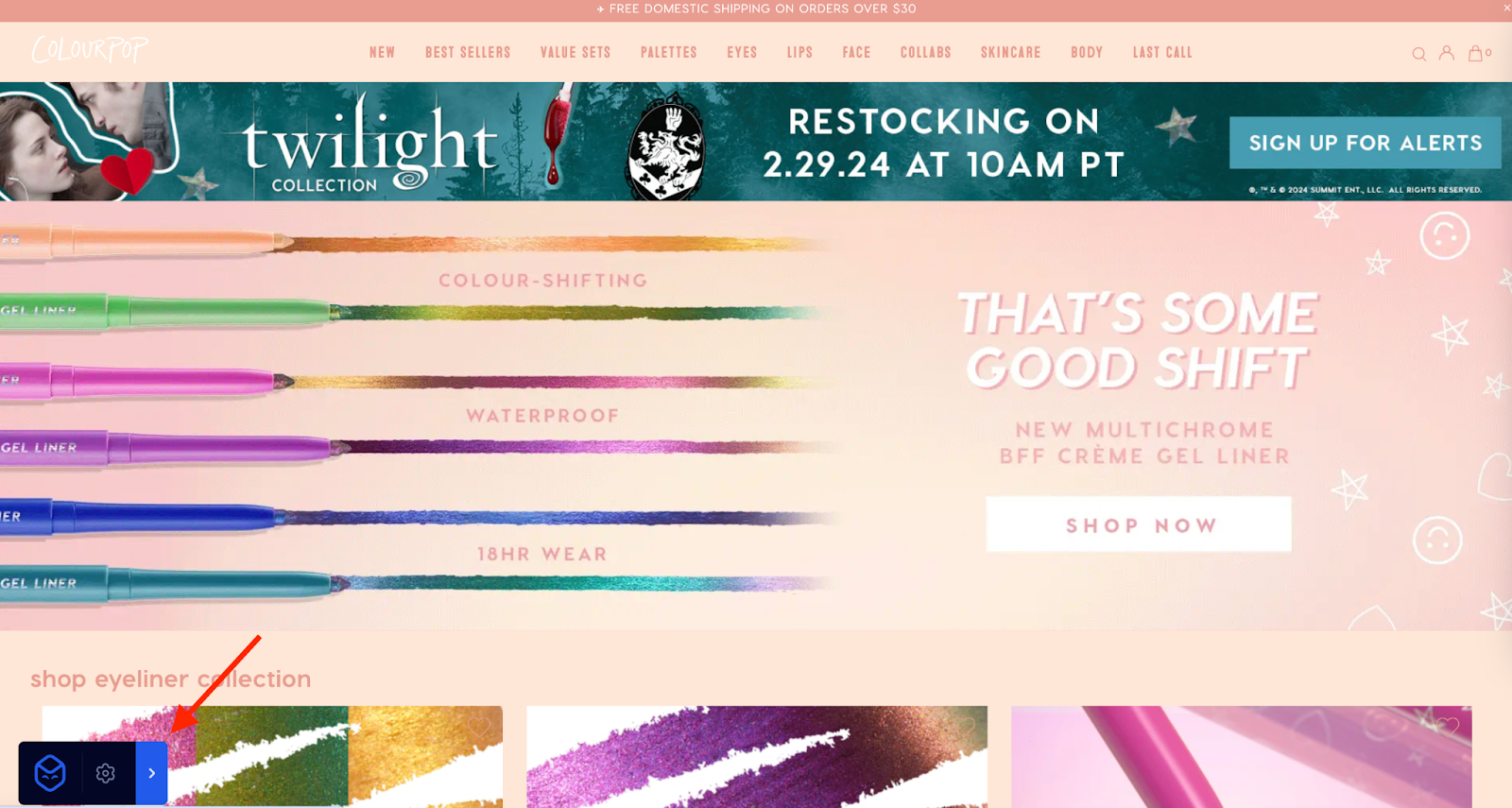
The domain match is the confirmation check. A store can trade under a different Page name. The first result may also belong to a reseller or regional account. Compare the domains and products before you trust the match.
If the extension shows no ad route, confirm that the site uses Shopify and reload the page after installation. Browser privacy settings can also block an extension until you grant site access. Open Meta Ad Library manually when the store's Page name is already clear.
This method needs a public storefront. Start with Dropship Ad Library when your only clue is a niche, product phrase, or image. After the extension makes a match, save both the store URL and advertiser Page.
6. View your own recent ad activity
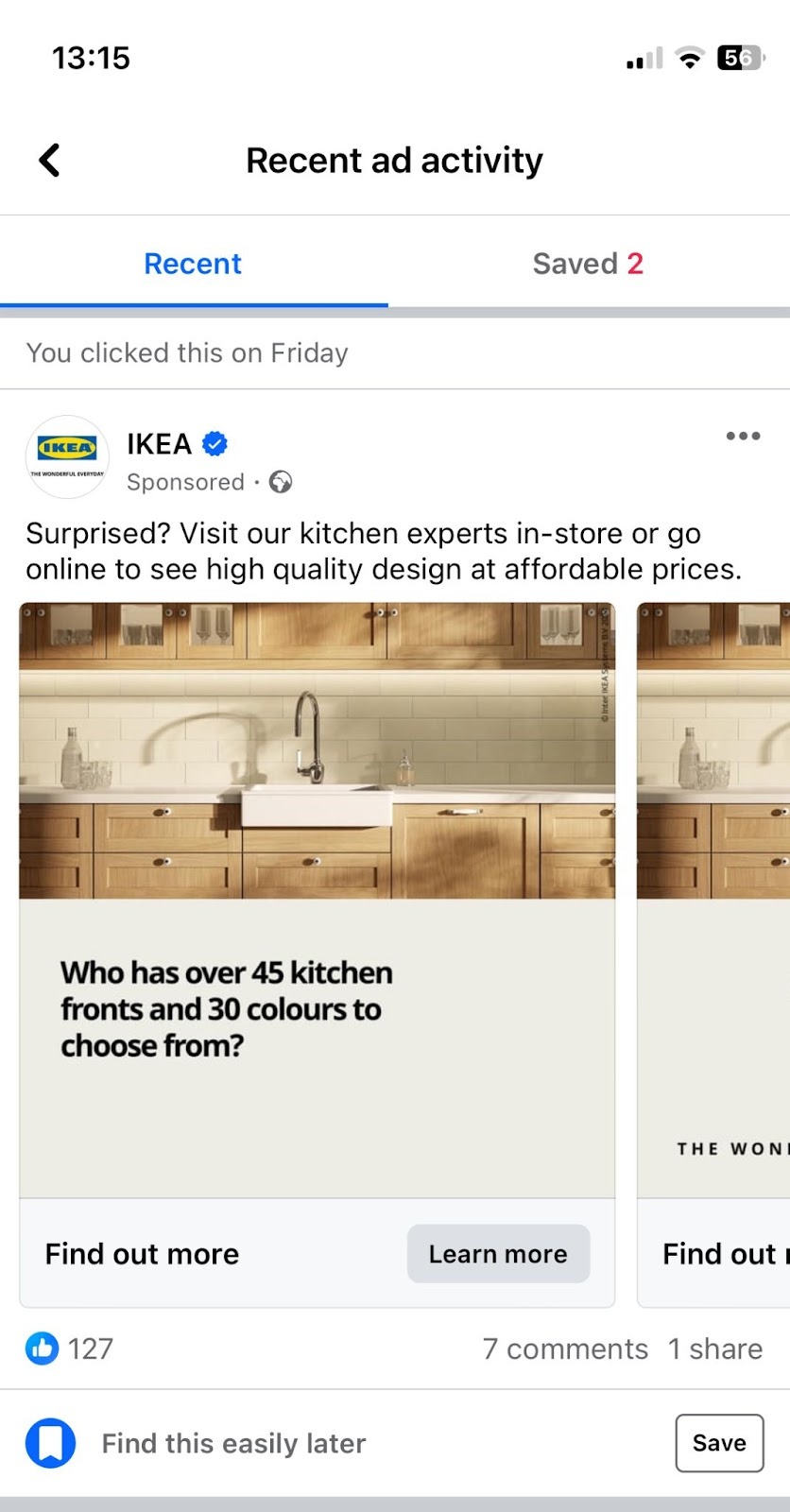
Use Recent Ad Activity for an ad you've already clicked, reacted to, or saved. It searches your own history. That makes it useful for a half-remembered product with no clear brand or keyword.
On desktop, facebook.com/ads/activity may open the page after you sign in. Menu labels vary by account and rollout. The manual route usually begins in Facebook settings under Ads or Ad preferences.
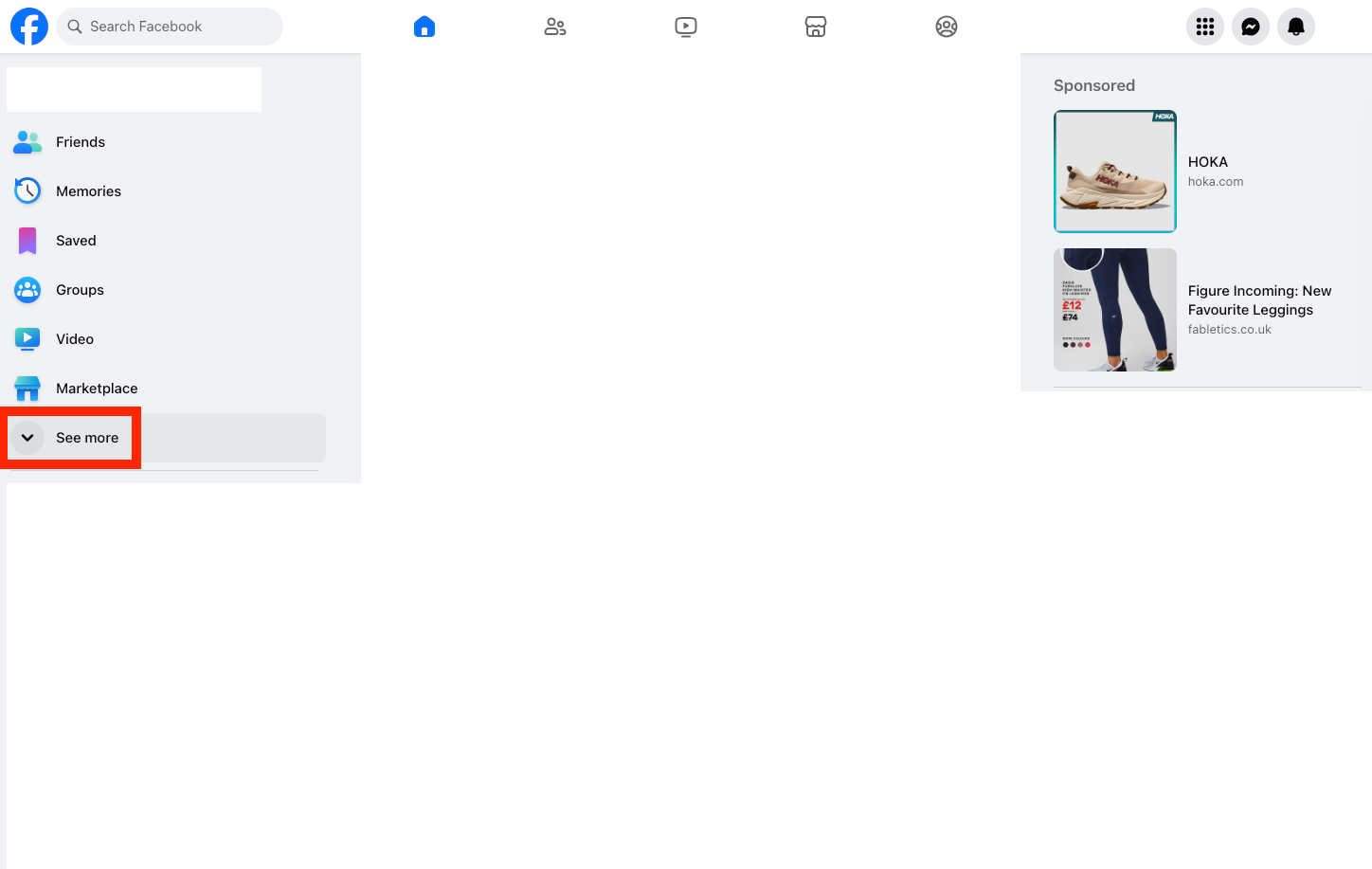
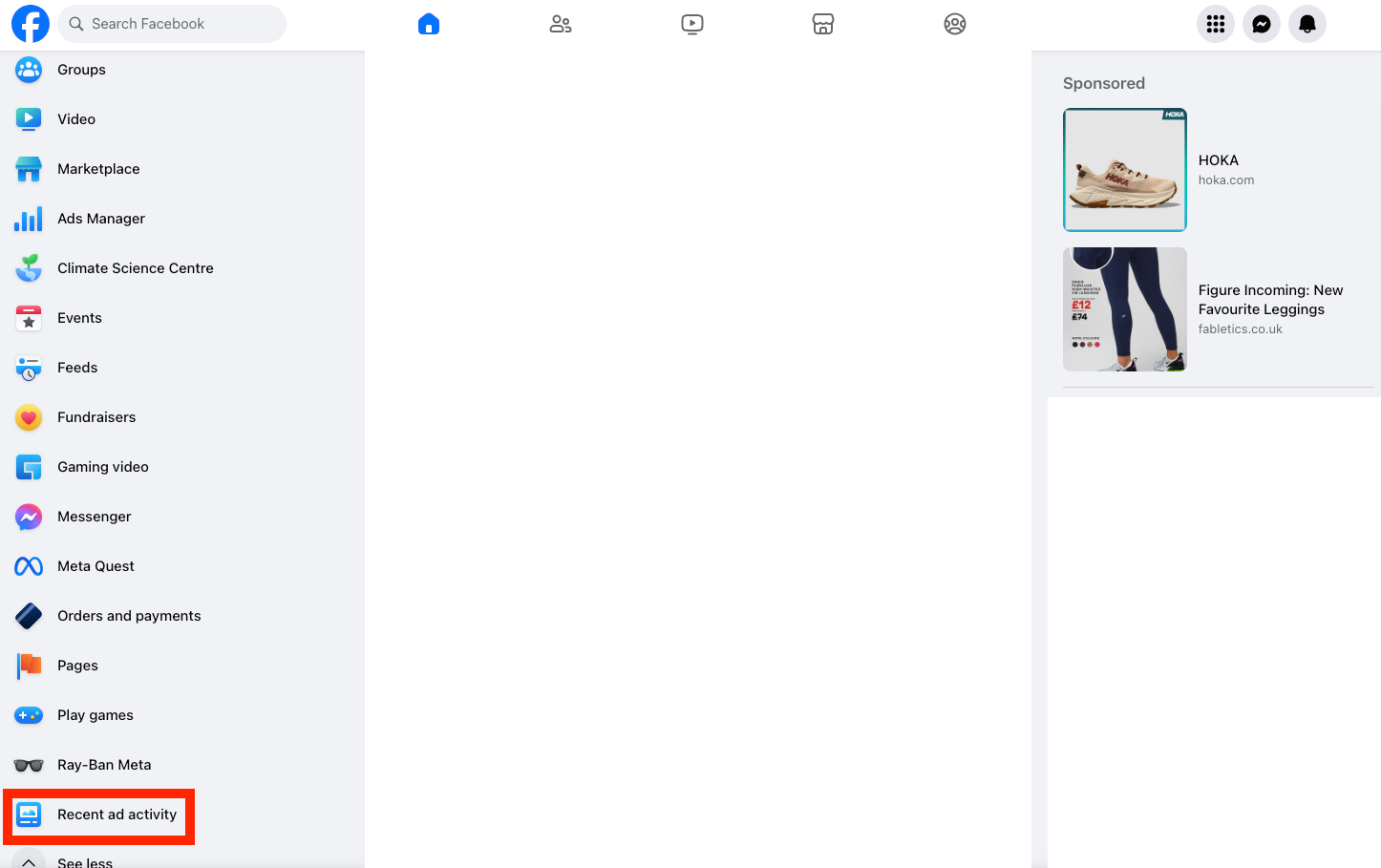
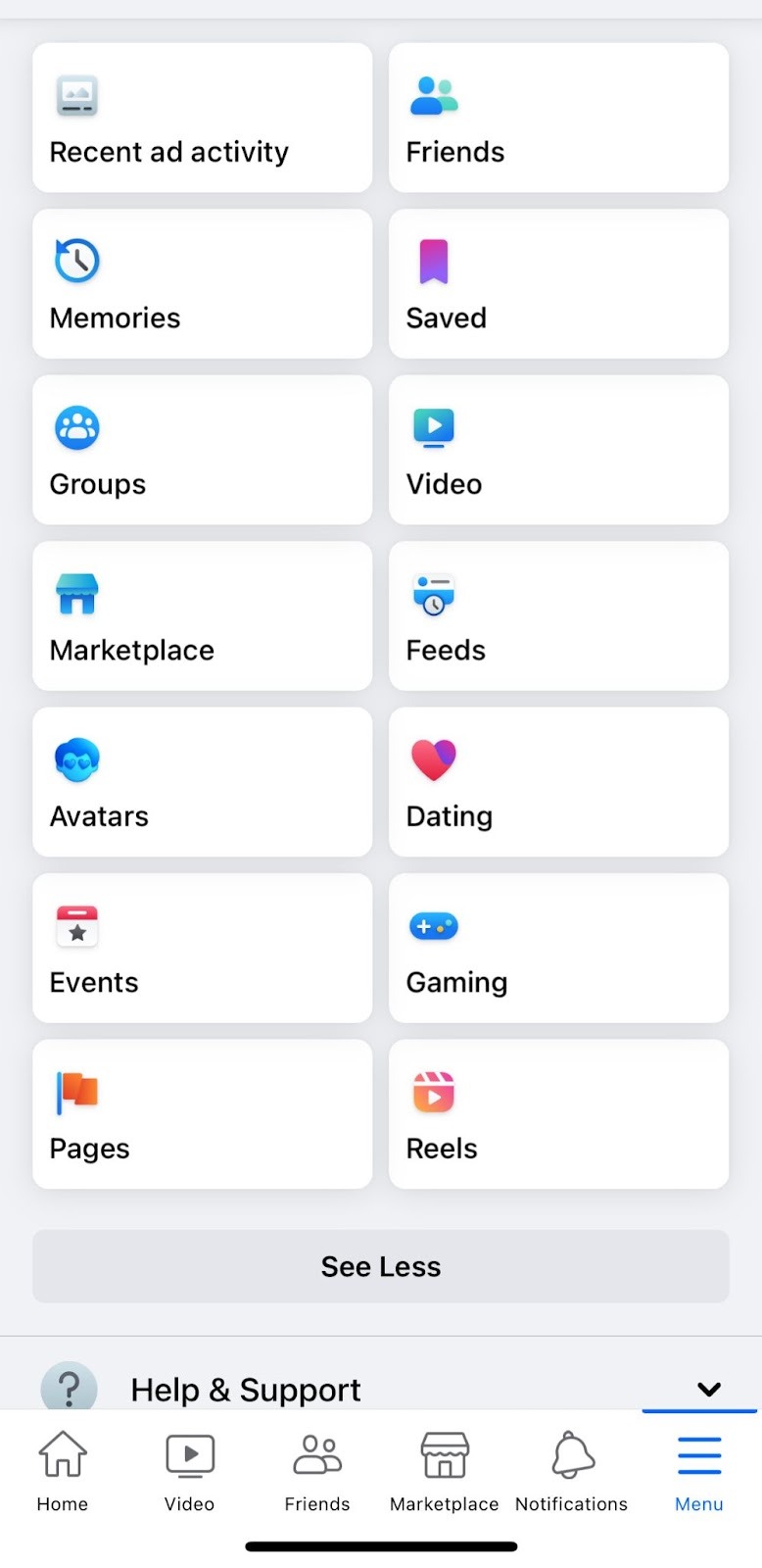
On mobile, open Menu, then Settings & privacy and Settings. Look under Ads or Ad preferences for Recent Ad Activity. Some accounts shorten the label to "Ad Activity." Search the settings for "ad activity" when the expected menu is absent.
Open the ad and save it once you find it. Also copy the advertiser name or store URL into your research notes. A second record survives menu changes and gives you a direct Ad Library search term.
How the 6 methods compare
Choose Meta Ad Library for a free lookup, Dropship Ad Library for deep discovery, or the Chrome extension for a known store URL. Route length is short for a direct search or opening, medium when setup is required, and variable when Meta must first deliver the ad to you.
Filter depth is high when several product or campaign fields can narrow results. Medium covers core search and category controls. Low means research filters aren't available. The required starting clue separates an unknown-store search from recovery of an ad you've already seen.
The feed and Recent Ad Activity both depend on delivery to your account. The tradeoff is control. Meta decides what reaches the feed, while your history contains only your account's retained activity. When the same competitor matters across launches, move its Page into Advertiser Tracker.
Then use a fixed routine for tracking the competitor's copy.
Why the Ad Library sometimes shows nothing
An empty Meta Ad Library search usually comes from country, category, search terms, or active-ad scope. Check them in that order. This troubleshooting reference covers the same failure pattern. Each setting changes what the library can return:
- Wrong country: Choose where the ad reached people.
- Special category: Switch ordinary commerce searches back to "All ads."
- Term mismatch: Try the official Page name and a phrase from the ad.
- No active ad: Confirm the advertiser currently runs campaigns in that scope.
The country filter is easy to misread. A US store may advertise only in Canada. In that case, a United States search correctly returns nothing. A prior political search can also leave a special category selected and remove product ads.
Meta's global library centers on ads currently running. Its broader archive covers political ads and certain ads delivered in the European Union and United Kingdom. An empty result outside those scopes proves only that the selected search found no current ad.
Search terms deserve one extra pass. Try the official Page name, store domain, product name, and one exact line from the creative. A company name on packaging may differ from its Facebook Page.
If all four checks fail, use the store URL with the Chrome extension. Advertiser Tracker gives you another Page search before you decide the advertiser has stopped.
How to use these ads for your own store
Competitor ads become useful when they change a product decision or a campaign brief. Separate those jobs so visible engagement doesn't turn into an unsupported claim about sales.
Start with one saved ad and choose which decision it will inform. A product question needs demand and margin evidence. A campaign question needs a clear hook, supportable proof, and a controlled test. Keeping those tracks separate stops creative appeal from masquerading as product validation.
Product inspiration
Use an ad to form a product question, then test it with store and sales evidence. Record the product, offer, buyer, first-run date, current activity, and visible creative versions. Those facts show what the advertiser is testing. Reactions and comments still can't prove profitable orders.
Look for repeated commitment across several ads. Multiple active versions around one product suggest a live test or a scaled angle. Pair the ad research with a sales tracker to check for demand beyond social engagement.
Build one research card for each candidate with these inputs:
- Save the ad link, store URL, visible price, and offer.
- Name the buyer and problem shown in the creative.
- Record the first-run date and number of active versions.
- Add supplier cost, shipping time, and likely return risk.
The card turns a saved ad into a decision record. It also makes two products easier to compare on the same facts.
Watch for a mismatch between the ad and the store. A strong demo can drive clicks while the landing page hides shipping time or weakens the offer. That gap changes the lesson. You may have found a good hook attached to a poor customer path.
Check demand, margin, supplier, and shipping before a sample order. A polished ad can still promote an offer your store can't fulfill at a profit.
Campaign inspiration
Adapt the mechanism that makes an ad clear, then write original creative for your product and audience. Break the reference into its hook, proof, offer, format, call to action, and landing-page promise. Keep the part that solves the same communication problem. Replace the advertiser's wording, footage, claims, and branding.
Verify every claim against your own product before it enters the brief. A competitor's demo may use a feature, material, or result your supplier can't support. The proof format, such as a close-up demo, can carry a claim your own item supports.
Build a short creative brief with these checks:
- Name the buyer problem that makes the product relevant.
- State the first visual or line the viewer receives.
- Choose a demo, comparison, review, or concrete product detail.
- Record the price, bundle, guarantee, or other buying reason.
- Match the page headline with the ad's main claim.
Write two or three fresh hooks around the same promise while keeping the proof and offer steady. This setup tells you whether the opening changed the response.
Next, structure the Facebook ad account around one clear angle and change one part per test. That setup lets you measure purchases within your margin without hiding the cause of the result.
FAQ
How can I find an ad I saw on Facebook but didn't save?
Use Facebook Ad Activity after signing in, or open facebook.com/ads/activity on desktop. It can recover ads you engaged with and give you a fresh advertiser search term.
How do I see a specific Page's Facebook ads?
Search the Page name in Meta Ad Library, select the matching advertiser, and check its website or Page link. Try another regional Page when several accounts share the brand name.
Can I filter ads by country or language?
Yes, choose the delivery country before searching, then filter by language when that option appears. Country tracks delivery, so a US brand can appear in a Canadian search.
Do I need a Facebook account to use the Ad Library?
Meta's public Ad Library can be searched without signing in, though regional prompts may appear. Facebook Ad Activity requires the account that created the personal history.


